
Reviewed By: Dr. Paul M. Griffey
Posterior capsule opacification is a common cause of vision becoming cloudy again months or years after cataract surgery. It can feel discouraging after your vision first improves, but PCO is different from the original cataract and is usually treated with a brief laser procedure called YAG laser capsulotomy.
This guide explains what causes PCO, what symptoms to watch for, how it is diagnosed, and when to call your eye doctor.
Table of Contents
What Exactly Is Posterior Capsule Opacification?
Posterior capsule opacification, or PCO, is the clouding of the thin membrane that holds your artificial lens after cataract surgery. The artificial lens remains clear, but cells left behind after surgery can grow across the capsule and scatter light, causing blurry vision, glare, halos, and reduced contrast.
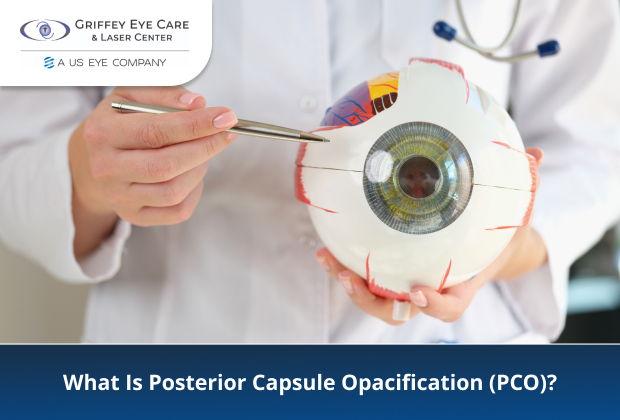
The Lens Capsule: What It Is and Why It Matters
During cataract surgery, the cloudy natural lens is removed and replaced with an artificial intraocular lens, or IOL. The clear lens capsule is usually left in place because it helps support the IOL.
The back portion of that capsule sits behind the implant. When it becomes cloudy or wrinkled, vision can look hazy again.
Why the Capsule Clouds Over
PCO occurs when residual lens epithelial cells grow along the capsule after surgery. Over time, those cells can thicken, wrinkle, or cloud the membrane.
Modern surgical techniques and IOL designs have reduced PCO rates, but they have not eliminated the condition. Patients comparing IOL options for cataract surgery may hear that certain lens designs are intended to lower this risk.
Is PCO the Same as a Cataract Returning?
PCO is often called a secondary cataract after surgery, but it is not the same as the original cataract returning. Once the natural lens is removed, the cataract cannot grow back.
Because the symptoms feel similar, patients often ask whether cataracts can come back. The capsule has become cloudy, while the implant remains clear.
How Common Is PCO After Cataract Surgery?
Posterior capsule opacification is widely described as the most frequent long-term complication after cataract surgery. One review in JAMA Ophthalmology reported that decreased visual acuity due to PCO occurs in 20% to 40% of patients within 2 to 5 years after surgery. However, rates vary by age, eye health, surgical factors, and lens design.
PCO can develop within months, but many patients notice it years later. Timing alone does not confirm the diagnosis, so an eye exam is the right next step.
Symptoms of Posterior Capsule Opacification: What to Watch For
Posterior capsule opacification symptoms usually develop gradually. Many patients first notice that their vision is no longer as crisp as it was after cataract surgery.
Gradual Blurring of Vision
The most common symptom is slowly worsening haze or blur. If you are concerned about blurry vision after cataract surgery, your eye doctor can check whether PCO, dry eye, changes in glasses, or another issue is responsible.
Increased Glare and Halos Around Lights
PCO can scatter light, making nighttime driving or bright indoor lighting more difficult. Patients may notice glare, starbursts, or halos after cataract surgery.
Difficulty With Contrast and Colors
PCO may make colors look duller or reduce contrast, making reading, stairs, or similar shades harder to see.
How PCO Symptoms Differ From the Original Cataract
PCO symptoms resemble those of cataracts, but the timing is different. The original cataract occurs before surgery. PCO often appears after cataract surgery, following a period of improved vision.
How Is PCO Diagnosed?
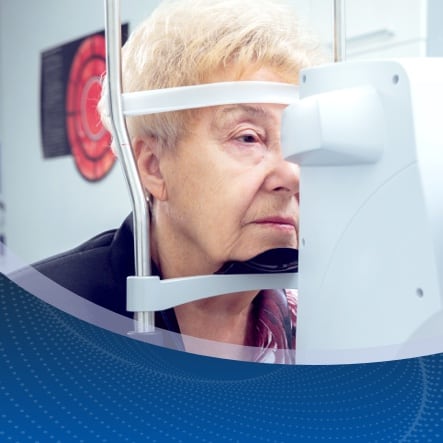
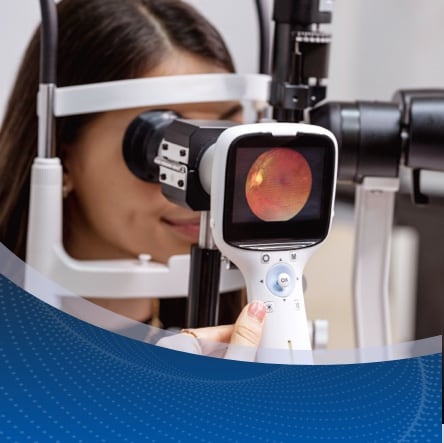
PCO is diagnosed during an eye exam. Your eye doctor will review your symptoms, check your vision, and examine the lens capsule, often with a slit lamp.
The exam also helps rule out other causes of blurry vision after cataract surgery. Similar symptoms can come from dry eye, retinal conditions, glaucoma, macular problems, or a need for updated glasses.
Treatment for PCO: YAG Laser Capsulotomy Explained
Posterior capsule opacification treatment is usually YAG laser capsulotomy. This in-office laser procedure creates a small opening in the cloudy capsule so light can pass through clearly again.
What Is a YAG Laser Capsulotomy?
A YAG laser capsulotomy for secondary cataract uses focused laser energy to open the center of the cloudy posterior capsule. The artificial lens stays in place.
What to Expect During the Procedure
Your eye is typically numbed with drops, and the laser treatment is performed while you sit in front of a specialized instrument. You may hear clicking sounds or see flashes of light, but the procedure is generally brief.
How Quickly Does Vision Improve After YAG Laser Treatment?
YAG laser capsulotomy recovery time is usually short. Some patients notice clearer vision quickly, while others improve over the next day or so. Mild floaters can happen afterward and often fade with time.
Is YAG Laser Capsulotomy Safe?
YAG capsulotomy is considered safe and effective, but every eye procedure has possible risks. These can include pressure changes, inflammation, retinal swelling, lens movement, or, in rare cases, retinal tear or detachment.
Does PCO Come Back After YAG Treatment?
PCO usually does not return in the same way after YAG treatment because the cloudy central capsule has been opened. Rarely, additional clouding or other issues may need follow-up care.
Who Is at Higher Risk of Developing PCO?
Some patients have a higher risk of PCO. Risk can be higher in younger patients, patients with diabetes, people with uveitis or inflammatory eye disease, and patients with certain IOL characteristics.
Patients with diabetes should keep regular follow-up appointments after cataract surgery.
PCO vs. Other Causes of Blurry Vision After Cataract Surgery
PCO is common, but other issues can blur vision after cataract surgery, including dry eye, healing changes, retinal disease, macular swelling, glaucoma, or changes in glasses prescription.
How Do You Know It Is PCO and Not Something Else?
You cannot reliably diagnose PCO at home. A dilated eye exam lets your doctor look at the capsule, retina, cornea, pressure, and overall eye health before recommending treatment.
When Should You Call Your Eye Doctor About PCO?
Call your eye doctor if vision becomes cloudy again after cataract surgery, glare increases, halos become bothersome, or reading and driving feel harder than they did before.
Seek prompt care for sudden vision loss, new flashes, a sudden increase in floaters, eye pain, or a curtain-like shadow in your vision. Those symptoms may point to an urgent eye problem.
Early in the healing process, our guide to cataract surgery recovery time can help explain what to expect.
Key Takeaways
Posterior capsule opacification is a common cause of cloudy vision after cataract surgery. It is sometimes called a secondary cataract, but the original cataract has not returned. PCO is diagnosed during an eye exam and is usually treated with YAG laser capsulotomy.
Symptoms often include blurry vision, glare, halos, and reduced contrast. Because other eye conditions can cause similar symptoms, an exam is the safest way to confirm the cause.
Griffey Eye Care Is Here to Help
Posterior capsule opacification can be frustrating, especially when vision has improved after cataract surgery. The condition is common, treatable, and different from the original cataract coming back.
If you are noticing cloudy vision, glare, or halos after cataract surgery, Griffey Eye Care can evaluate your eyes and explain your options. Learn more about laser cataract surgery at Griffey Eye Care or contact our Ophthalmologists in Chesapeake, VA, to schedule an appointment.
Frequently Asked Questions
How long after cataract surgery can PCO develop?
PCO can develop months or years after cataract surgery. Some patients notice symptoms relatively soon, while others have clear vision for a long time before clouding appears.
Is PCO painful?
PCO itself typically does not cause pain. If you have eye pain, sudden vision loss, flashes, or many new floaters, call your eye doctor promptly.
Can PCO be prevented?
PCO cannot always be prevented. Modern cataract techniques and square-edge IOL designs help reduce risk, but some patients still develop posterior capsule clouding.
Will insurance cover YAG laser capsulotomy?
Coverage depends on your insurance plan and whether the procedure is medically necessary. Griffey Eye Care can help you understand what information may be needed for your specific coverage.
Do I need to return to the operating room for PCO treatment?
Usually, no. YAG laser capsulotomy is typically performed in the office rather than in an operating room.