
Reviewed By: Dr. Paul M. Griffey
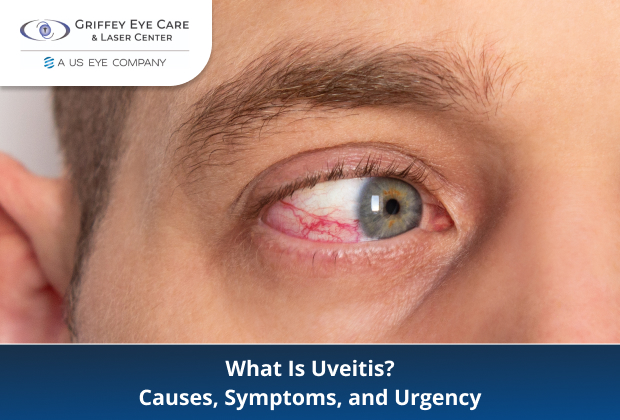
Uveitis is inflammation inside the eye, usually involving the uvea, which includes the iris, ciliary body, and choroid. Symptoms can include redness, eye pain, light sensitivity, floaters, and blurred vision. Because untreated uveitis can damage eye structures and affect vision, symptoms should be evaluated promptly by an eye doctor.
Uveitis can affect one or both eyes and may develop suddenly or gradually. Some forms cause obvious pain and redness, while others primarily affect vision, which can make the condition harder to recognize.
Understanding the symptoms and knowing when to seek care can help protect your vision.
Table of Contents
What is Uveitis?
The uvea is the middle layer of the eye, located between the white outer wall of the eye and the retina. Uveitis occurs when this area becomes inflamed, although inflammation may also involve nearby structures such as the retina or vitreous.
Uveitis can cause vision loss when it is not treated, which is why new symptoms deserve prompt attention.
Types of Uveitis
Doctors classify uveitis according to the area of the eye where inflammation occurs. The location can influence both the symptoms and the treatment required.
Anterior Uveitis
Anterior uveitis affects the front of the eye, particularly the iris and sometimes the nearby ciliary body. It is the most common type of uveitis.
Symptoms often include redness, aching eye pain, blurred vision, and sensitivity to light. Iritis, or inflammation of the iris, is a form of anterior uveitis.
Intermediate Uveitis
Intermediate uveitis mainly affects structures in the middle of the eye, including the vitreous, the gel-like material that fills much of the eyeball.
People may notice blurred vision or new floaters with relatively little redness or discomfort. A sudden increase in eye floaters should always be evaluated because floaters can occur with several eye conditions, including retinal problems.
Posterior Uveitis
Posterior uveitis affects structures toward the back of the eye, including the retina and choroid. It may cause blurred or reduced vision, floaters, or missing areas of vision without the pronounced pain associated with some cases of anterior uveitis.
Panuveitis refers to inflammation involving the front, middle, and back of the eye.
What Causes Uveitis?
There is no single cause of uveitis, and sometimes an underlying cause cannot be identified.
Inflammatory and autoimmune conditions associated with uveitis include ankylosing spondylitis and other HLA-B27-related diseases, sarcoidosis, Behçet disease, lupus, psoriasis, rheumatoid arthritis, and inflammatory bowel disease.
Uveitis can also develop in connection with infections such as shingles, syphilis, tuberculosis, toxoplasmosis, and cytomegalovirus. Eye injuries and certain medications are additional possible causes.
Having uveitis does not necessarily mean that you have an autoimmune disease or infection. Your eye doctor will consider the location and appearance of the inflammation along with your symptoms, medical history, and any other health concerns.
Symptoms of Uveitis
Uveitis symptoms vary depending on which part of the eye is affected. Symptoms can appear suddenly and may affect one or both eyes.
Common uveitis symptoms include:
- Eye pain or aching
- Redness
- Eyes sensitive to light
- Blurred or reduced vision
- Floaters
- Changes or gaps in the visual field
Anterior uveitis is more likely to cause noticeable pain, redness, and light sensitivity. Intermediate and posterior uveitis may produce more floaters and vision changes with less discomfort.
Because these symptoms overlap with other eye conditions, including retinal problems, infections, and glaucoma, symptoms alone cannot confirm uveitis. Blurry vision in one eye or other sudden vision changes deserve evaluation.
Is Uveitis an Emergency? How Urgent is Treatment?
Suspected uveitis requires prompt evaluation by an eye doctor. The National Eye Institute recommends seeing an eye doctor right away when uveitis symptoms develop because ongoing inflammation can damage the eye and lead to vision loss.
That does not mean every mildly irritated or red eye requires an emergency room visit. The concern increases when redness occurs with significant pain, pronounced light sensitivity, new floaters, or vision changes.
Sudden or substantial vision loss, severe eye pain, flashes of light, or a curtain or shadow crossing your vision require immediate attention because these symptoms can also occur with other sight-threatening eye conditions.
Complications of uveitis can include glaucoma, cataracts, macular swelling, retinal damage, and permanent vision loss.
Uveitis vs. Conjunctivitis (Pink Eye): How to Tell the Difference
Uveitis and conjunctivitis can both cause a red, uncomfortable eye, but they involve different parts of the eye.
Conjunctivitis affects the conjunctiva, the thin membrane covering the white of the eye and the inside of the eyelids. It often causes itching, burning, watering, or discharge. Uveitis involves inflammation inside the eye and is more likely to cause deeper pain, significant light sensitivity, floaters, or blurred vision. The National Eye Institute notes that some forms of pink eye improve without treatment, although the cause determines the appropriate care.
The appearance of a red eye alone is not enough to tell the two apart. Pain, light sensitivity, or vision changes are reasons to have the eye examined rather than assuming the problem is pink eye.
How is Uveitis Diagnosed?
Diagnosis begins with an eye examination and a review of your medical history. Your eye doctor will look for signs of inflammation and determine which structures are involved.
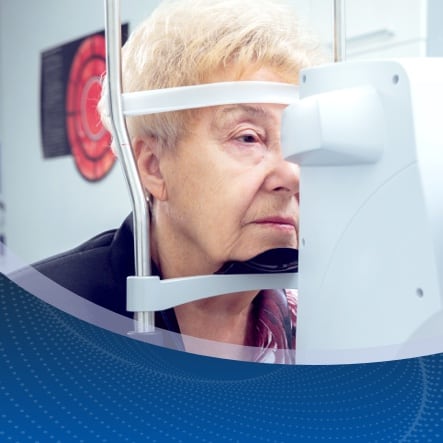
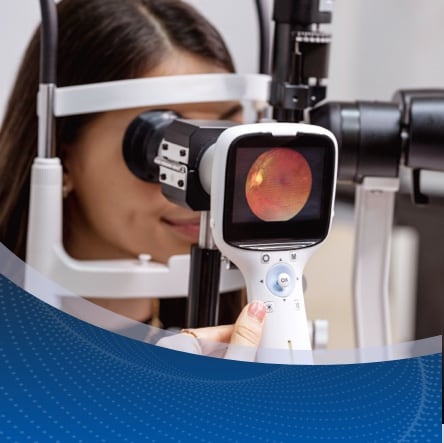
Testing may include checking visual acuity, examining the eye with a slit lamp, measuring eye pressure, and performing a dilated examination to evaluate structures farther back in the eye.
Additional testing depends on what the examination shows. Blood tests, imaging, infectious-disease testing, or evaluation by another medical specialist may be appropriate when an underlying condition is suspected. There is no single set of tests required for every person with uveitis.
How Is Uveitis Treated?
Uveitis treatment depends on where the inflammation is located, how severe it is, and what caused it.
Controlling Inflammation
Prescription corticosteroid eye drops are commonly used for noninfectious anterior uveitis. Dilating drops may also be prescribed to reduce discomfort and help prevent the inflamed iris from adhering to nearby structures.
More extensive, chronic, or recurrent inflammation may require corticosteroid injections, oral medications, or drugs that regulate the immune system. Treatment for acute anterior uveitis commonly includes topical corticosteroids and dilating drops, with treatment adjusted to the severity and cause of the inflammation.
Steroids require medical monitoring because prolonged or repeated use can contribute to increased eye pressure and cataracts.
Treating an Underlying Infection
When an infection causes uveitis, treatment also needs to address that infection. Depending on the cause, this may involve antiviral, antibiotic, antifungal, or antiparasitic medication.
Patients should not attempt to treat suspected uveitis with leftover prescription eye drops. Steroids can be inappropriate in some infectious eye conditions when used without the correct accompanying treatment.
Can Uveitis Come Back or Cause Permanent Vision Loss?
Yes. Some people experience one episode that resolves with treatment, while others develop recurrent or chronic uveitis.
Repeated or persistent inflammation can damage eye structures and increase the risk of complications such as glaucoma, cataracts, macular edema, and vision loss. Follow-up appointments are important even after symptoms improve because your eye doctor can determine whether inflammation has fully resolved and monitor for complications.
Key Takeaways
- Uveitis is inflammation inside the eye and may affect the front, middle, back, or multiple areas.
- Symptoms can include pain, redness, light sensitivity, floaters, and blurred or reduced vision.
- Possible causes include inflammatory diseases, infections, eye injuries, and certain medications.
- Suspected uveitis warrants prompt evaluation because untreated inflammation can threaten vision.
- Treatment depends on the location, severity, and underlying cause of the inflammation.
- Uveitis can recur, making follow-up care important even after symptoms improve.
Protecting Your Vision Starts With Prompt Care
Uveitis can resemble other causes of a red or uncomfortable eye, particularly when symptoms first appear. Pain, pronounced light sensitivity, new floaters, or changes in vision are reasons to have the eye evaluated rather than waiting to see whether the symptoms resolve.
Prompt diagnosis allows your eye doctor to identify where the inflammation is occurring, determine what may be causing it, and recommend treatment to control inflammation and protect your vision.
When to See an Eye Doctor at Griffey Eye Care
Eye pain, significant redness, light sensitivity, new floaters, or sudden changes in vision deserve prompt attention. The eye doctors in Chesapeake, VA, at Griffey Eye Care & Laser Center can examine your eyes, identify the cause of your symptoms, and determine the appropriate next steps.
If you are experiencing irritating or painful eye symptoms, contact Griffey Eye Care to schedule an evaluation. We are currently accepting new patients at our Kempsville and Carmichael locations in Chesapeake.
Call Griffey Eye Care:
- Kempsville: 757-776-0416
- Carmichael: 757-776-0422
Or schedule an appointment online.
FAQs
What Happens if Uveitis Is Left Untreated?
Ongoing inflammation can damage structures inside the eye and lead to complications such as glaucoma, cataracts, macular edema, retinal damage, and permanent vision loss.
What Autoimmune Disease Is Associated With Uveitis?
Uveitis is associated with several inflammatory and autoimmune conditions, including ankylosing spondylitis, sarcoidosis, Behçet disease, lupus, psoriasis, rheumatoid arthritis, and inflammatory bowel disease. Having uveitis does not automatically mean an autoimmune condition is present.
Can Uveitis Go Away on Its Own?
Some episodes may improve, but there is no reliable way to determine at home whether inflammation is resolving safely. Suspected uveitis should be evaluated so an eye doctor can determine whether treatment is necessary.
Is Uveitis Contagious?
Uveitis itself is not contagious. Some infections associated with uveitis can spread between people, but the inflammation inside the eye cannot be passed from one person to another.
Can Uveitis Come Back After Treatment?
Yes. Uveitis can return after treatment, particularly when it is associated with an ongoing inflammatory condition. Some patients experience isolated episodes, while others need longer-term monitoring.
What is the Difference Between Iritis and Uveitis?
Iritis means inflammation of the iris, the colored part of the eye. It is a type of anterior uveitis. Uveitis is the broader term and can describe inflammation affecting structures in the front, middle, or back of the eye.
**Please note that the suggestions provided in this blog are for general informational purposes only and may not be suitable for your specific insurance plan and needs. It is important to consult a qualified healthcare professional for personalized advice and treatment.**