

Reviewed By: Dr. Paul M. Griffey
Cataract surgery with macular degeneration can still improve vision when a cataract is contributing to blur, glare, faded colors, or difficulty with everyday activities. Surgery removes the cloudy lens, but it does not treat retinal damage caused by age-related macular degeneration (AMD). Patients with dry or wet AMD can often have cataract surgery, although the timing, expected benefit, and choice of lens implant should be based on the condition of the macula and the type of AMD present. Current evidence does not show that cataract surgery increases the risk of progression to late AMD.
Table of Contents
How Cataracts and Macular Degeneration Affect Vision Differently
Cataracts and AMD can occur together because both become more common with age, but they affect different parts of the eye.
A cataract develops when the natural lens becomes cloudy. This can cause blurry vision, faded colors, glare, and difficulty seeing at night. AMD affects the macula, the area of the retina responsible for detailed central vision.
What Cataract Surgery Can—and Cannot—Improve
Cataract surgery removes the cloudy natural lens and replaces it with an artificial intraocular lens, or IOL. This can improve vision reduced by the cataract.
It cannot repair macular damage. If AMD has already caused central vision loss, some of that limitation may remain after surgery.
This distinction helps set realistic expectations for cataract surgery with macular degeneration. The question is usually how much of the current vision problem comes from the cataract and how much comes from AMD.
Is Cataract Surgery Safe With Macular Degeneration?
Patients sometimes delay surgery because they worry that removing a cataract could accelerate AMD.
Current evidence is reassuring. An analysis of participants in the National Eye Institute-sponsored AREDS2 study found no increased risk of developing late AMD in eyes that underwent cataract surgery compared with eyes that did not. NEI states that patients generally do not need to avoid cataract surgery solely because of concern that it will worsen AMD.
Why Your Macula Needs to Be Evaluated Before Surgery
Whether it is safe to have cataract surgery with macular degeneration still depends on the individual eye.
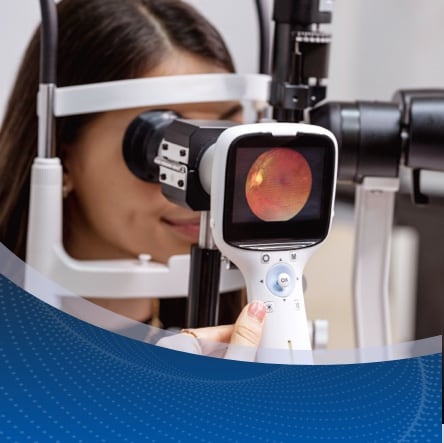
Before surgery, your ophthalmologist may closely examine the retina and use optical coherence tomography (OCT) to assess the macula. This can reveal changes that may affect the expected visual outcome or the timing of surgery.
For a broader overview of cataract surgery risks and safety, our guide also explains whether cataract surgery is safe for patients with other eye or medical conditions.
How Dry and Wet Macular Degeneration Affect Surgery Planning
The type and activity of AMD can affect surgical planning.
Cataract Surgery With Dry Macular Degeneration
Patients with dry AMD can often proceed with cataract surgery when the cataract is interfering with daily vision.
Dry AMD does not have the same active blood-vessel leakage seen in wet AMD. The amount of improvement after surgery will still depend on how much macular damage is already present.
Cataract Surgery With Wet Macular Degeneration
Cataract surgery with wet macular degeneration may also be appropriate, but timing requires closer coordination.
Patients receiving anti-VEGF injections may need their cataract surgeon and retina specialist to plan treatment around surgery. A review of the available evidence found that cataract surgery can provide quality-of-life and visual benefits for patients with AMD, while timing in people undergoing active anti-VEGF treatment should be individualized.
Patients should continue AMD treatment as directed rather than stopping injections because cataract surgery is being considered.
What Results Can Patients With AMD Expect?
Cataract surgery for AMD patients can improve vision when the cataract itself is causing a meaningful part of the visual decline.
Research has found measurable improvements in visual acuity after cataract surgery in patients with AMD. A systematic review found better visual acuity in operated eyes at follow-up, with no evidence of increased short-term progression to wet AMD.
Which Vision Problems May Remain After Surgery?
How much improvement a person notices depends on the health of the macula.
Removing a cataract may improve brightness, contrast, color perception, or glare. Fine-detail tasks may remain difficult when AMD has caused substantial central retinal damage.
Cataract removal can also give the eye doctor a clearer view of the retina, which may make ongoing AMD monitoring easier. NEI specifically notes that cataract removal may sometimes be recommended partly to help doctors examine and treat conditions at the back of the eye.
Tip: Before surgery, ask which of your current visual symptoms are most likely caused by the cataract and which may be related to AMD. That conversation can make postoperative expectations much clearer.
Choosing an IOL When You Have AMD
Lens selection deserves additional consideration when macular disease is present.
Why Contrast Sensitivity Matters
AMD can already reduce contrast sensitivity. Some multifocal IOL designs split incoming light across different focal points, which can further reduce contrast.
For that reason, clinicians often approach multifocal lenses cautiously in people with macular disease and may favor monofocal lenses, depending on retinal health and visual goals. A review of cataract management in patients with AMD recommends avoiding multifocal IOLs in patients with macular disease.
The right lens still depends on the individual eye, so discuss IOL selection after the retina has been evaluated.
Key Takeaways
- Cataracts and AMD affect different structures within the eye.
- Cataract surgery with macular degeneration can improve vision limited by the cataract, but it cannot reverse retinal damage from AMD.
- Current AREDS2 evidence does not show an increased risk of progression to late AMD after cataract surgery.
- Patients with wet AMD may need surgery timed around ongoing retinal treatment.
- Macular health helps determine how much visual improvement is realistic.
- Monofocal lenses are often considered when AMD has reduced contrast sensitivity.
Conclusion
Having AMD does not automatically rule out cataract surgery. For many patients, treating a visually significant cataract can still make everyday vision clearer and more comfortable.
The most important step is determining how much of the vision loss comes from the cloudy lens and how much comes from the retina. A detailed exam can also help your ophthalmologist choose the right lens implant and coordinate surgery with AMD treatment when needed.
Patients considering Cataract surgery in Chesapeake, VA can discuss both conditions with Griffey Eye Care before deciding when surgery makes sense.
Frequently Asked Questions
Do I Still Need AMD Treatment After Cataract Surgery?
Yes, if your ophthalmologist or retina specialist has recommended ongoing AMD treatment. Cataract surgery treats the cloudy lens and does not replace anti-VEGF injections or other AMD care.
Can OCT Help Predict My Vision After Cataract Surgery?
OCT provides detailed images of the macula and can help identify retinal changes that may limit postoperative vision. It cannot guarantee a particular result, but it gives your ophthalmologist useful information for counseling and surgical planning.
Can Cataract Surgery Make It Easier to Monitor AMD?
Will Glasses Correct Vision That AMD Has Damaged?
Glasses can correct refractive error after cataract surgery, but they cannot restore retinal tissue damaged by AMD. Patients with more advanced central vision loss may benefit from low-vision rehabilitation or visual aids.
Schedule an Evaluation
If cataracts make daily activities harder and you also have macular degeneration, an eye exam can clarify what surgery may realistically improve.
Schedule an appointment with Griffey Eye Care & Laser Center to discuss your cataract, retinal health, and available surgical options