
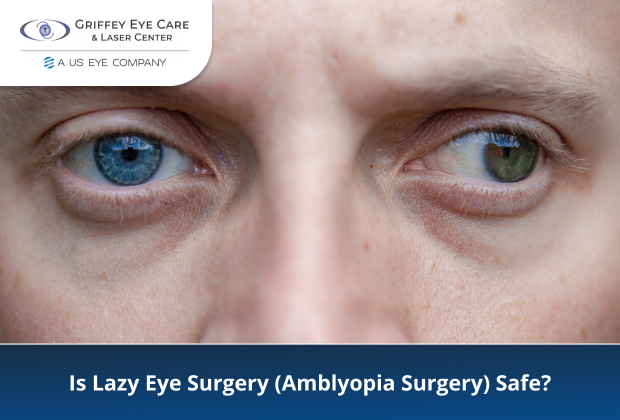
When someone is diagnosed with a “lazy eye,” surgery is often considered. It is common to feel cautious about any eye operation and to have questions about safety, effectiveness, and recovery. Much of the confusion comes from the fact that “lazy eye” is used to describe more than one condition. Understanding what lazy eye surgery actually treats, how amblyopia surgery works, and what to expect after the procedure helps families make informed decisions.
Table of Contents
What Lazy Eye Surgery Really Treats
In clinical terms, lazy eye can refer to amblyopia, strabismus, or both. Amblyopia is reduced vision in one eye because the brain relies more on the other eye. Strabismus is a misalignment of the eyes, where one eye turns in, out, up, or down. Amblyopia is primarily a developmental problem of the brain and the visual system. Strabismus is a mechanical problem involving the eye muscles.
There is no operation that directly “fixes” amblyopia inside the brain. When people talk about lazy eye surgery or amblyopia surgery, they are almost always referring to eye muscle surgery for strabismus. This type of surgery adjusts the muscles on the outside of the eye so the eyes line up more accurately. Better alignment often supports other amblyopia treatments, such as glasses, patching, or vision therapy.
How Does Amblyopia Surgery Work?
Eye muscle surgery is performed on the outer surface of the eye. The eyeball stays in the socket at all times. After anesthesia is given, the ophthalmologist makes a small opening in the clear tissue over the white of the eye to reach the muscles that move the eye.
Based on preoperative measurements, selected muscles are either weakened or strengthened. A weakening procedure moves the muscle’s attachment further back on the eye, so it pulls less strongly. A strengthening procedure shortens or folds the muscle, increasing its pull. Adjusting one or more muscles in this way brings the eyes closer to straight alignment. Most procedures are performed on an outpatient basis, and the operating time is usually 1 to 2 hours.
Is Lazy Eye Surgery Safe for Adults and Children?
Eye muscle surgery has been performed for many decades and is one of the most common eye operations. In general, it is considered very safe for both children and adults when performed by an experienced ophthalmologist. Most patients go home the same day. Serious complications, such as eye infection or permanent vision loss, are rare.
Given the importance that’s placed on correcting the issue during childhood, many often wonder, “Is lazy eye surgery safe for adults?” Adults generally tolerate this surgery well. Healing follows a similar pattern to that seen in children. However, adults may be more aware of temporary double vision or discomfort while the eyes and brain adjust to the new alignment. Age alone is not usually a barrier; overall health and specific eye findings are more important in planning surgery.
Is Amblyopia Surgery Effective?
When people ask, “Is amblyopia surgery effective?” they are usually thinking about two separate outcomes. For alignment and appearance, eye muscle surgery is highly effective for many patients. Aligning the eyes can improve depth perception, reduce eye strain, and make social interactions more comfortable.
For vision in the amblyopic eye, surgery is one part of a larger plan. Aligning the eyes does not, on its own, retrain the brain to use the weaker eye. Glasses, patching, or other therapies are often needed before and after surgery, particularly in children, to strengthen vision in the amblyopic eye. Adults with long-standing amblyopia may have less potential for significant vision gains, but many still notice improvements in comfort, depth judgment, and confidence once the eyes are aligned.
What to Expect After Lazy Eye Surgery
Knowing what to expect after lazy eye surgery helps set realistic expectations. The eye often looks red for several weeks because the surface tissues have been moved. Mild soreness, a gritty sensation, and light sensitivity are common at first. Over-the-counter pain medication is usually enough to manage discomfort.
Most patients receive prescription eye drops to reduce inflammation and lower the risk of infection. Reading and light daily activities can often resume within a few days. Still, swimming, contact sports, and dusty or dirty environments are usually restricted for a longer period, as directed by the surgeon. Many children return to school within several days, and many adults can return to desk work within about a week, depending on how they feel.
Short-term double vision can occur as the brain adjusts to the new eye position. This often improves over days to weeks as the visual system adapts. Follow-up visits allow the ophthalmologist to monitor healing, assess alignment, and determine whether additional therapy is needed.
Risks, Side Effects, and the Possibility of More Than One Surgery
All surgery carries some risk, even when it is considered routine. For lazy eye surgery, the most common side effects are temporary and include redness, soreness, eyelid swelling, and light sensitivity. Short-term double vision is more common in older children and adults as their brains adapt to the new alignment.
Less common complications include infection on the surface of the eye or scarring that slightly limits muscle movement. Serious complications that threaten vision are rare. The most common concern is under- or overcorrection of eye position, where the eyes are not perfectly aligned or drift over time. Some patients require a second procedure later to fine-tune the alignment.
When to Consult an Ophthalmologist
Lazy eye surgery is usually considered when misalignment affects depth perception, causes eye strain or double vision, or significantly impacts appearance and confidence. Early evaluation is critical in children to support visual development. Adults who have lived with eye misalignment for years often seek surgery when symptoms interfere with daily life or work.
A detailed examination by an eye doctor helps clarify whether amblyopia surgery is appropriate and how it fits into a complete treatment plan. During this visit, measurements of eye position, vision, and depth perception are taken, and treatment options are reviewed in detail.
Frequently Asked Questions
Does lazy eye surgery permanently cure amblyopia?
Eye muscle surgery aligns the eyes but does not directly correct the brain’s reduced use of the amblyopic eye. Many patients still need glasses, patching, or other vision therapy after surgery to support long-term improvement.
Is recovery different for adults compared to children?
The basic healing process is similar in both groups. Adults may be more aware of temporary double vision or discomfort, while children often adapt more quickly. Restrictions on activities and follow-up schedules are tailored to the individual rather than based solely on age.
Will glasses still be needed after amblyopia surgery?
Many patients continue to wear glasses after surgery. The procedure changes the alignment, not the eye’s underlying focusing power. Glasses often remain an essential part of treatment for amblyopia and strabismus.
Can lazy eye surgery be repeated if the eyes drift again?
If the eyes drift over time or if alignment is not where it needs to be after healing, a second surgery can be considered. Decisions about repeat surgery are made after careful measurements and discussion of goals with the ophthalmologist.
Conclusion
Lazy eye surgery, or eye muscle surgery for strabismus, is a well-established and generally safe option for many people living with misaligned eyes and amblyopia-related issues. It can play a vital role in improving alignment, comfort, and confidence, while other therapies continue to address the visual side of amblyopia. A consultation with an experienced Ophthalmologist in Chesapeake can provide a clear picture of risks, benefits, and realistic outcomes in each case.