
Reviewed By: Dr. Paul M. Griffey
If you’re thinking about LASIK, it’s normal to focus on one question first: Does LASIK eye surgery hurt? The short version is that most people do not describe LASIK as painful during the procedure. You may feel pressure and some odd sensations, but numbing drops prevent sharp pain. Afterward, it’s common to feel irritation for a few hours, then gradual improvement over the next day or two.
Below is what patients typically notice during LASIK, how LASIK eye surgery can feel afterward, and what happens after LASIK surgery as your eyes settle.
Table of Contents
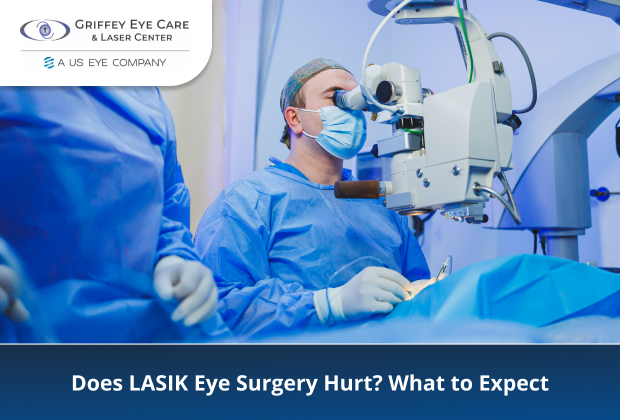
What does LASIK feel like during the procedure?
The experience is usually described as:
- Numbing drops first. Your eyes are numbed before anything starts. This is why most patients don’t feel sharp pain during LASIK.
- Pressure during the first steps. Some parts of the procedure involve a feeling of pressure around the eye. It can feel strange, and your vision may dim briefly, but it should not feel like stabbing pain.
- A clicking sound and a faint smell. The laser can create a mild odor and audible clicking. It’s unpleasant for some people, but it’s normal.
- Eyes held open. A small device keeps you from blinking. It’s not comfortable, but it’s not typically painful.
- A focus light. You’ll be asked to look at a target light. The system tracks eye movement, and the surgeon guides the process throughout.
If anxiety is high, some patients are given a mild medication to help them relax. It doesn’t put you to sleep. It helps keep you steady and less tense.
Also Read: How Long Does Lasik Last
How bad does LASIK eye surgery hurt afterward?
This is where most people feel something. Once the numbing drops wear off, many patients notice a gritty, burning, or watery feeling. Think “contact lens discomfort” more than “serious pain.”
What happens after LASIK surgery in the first few hours?
Right after LASIK, you’ll usually go home with protective shields and a plan for drops. As the numbing wears off, common symptoms include:
- Grittiness or burning. The sensation can feel like sand in the eyes.
- Tearing and light sensitivity. Bright indoor light can feel harsh at first.
- Blurry or hazy vision. This is expected early on and often improves quickly.
- An urge to rub your eyes. This is the big one to resist. Rubbing is one of the easiest ways to disrupt healing early.
Most discomfort peaks in the first several hours. Many people are more comfortable resting with their eyes closed and using drops on schedule.
What happens after LASIK surgery in the first few days?
For many patients, the first 24 to 48 hours are the “most annoying” part. It’s also usually when symptoms start trending down.
Your surgeon will typically have you:
- Use medicated drops to prevent infection and reduce inflammation.
- Use lubricating drops to reduce dryness and irritation.
- Wear protective shields at night to prevent rubbing your eyes in your sleep.
- Avoid eye makeup, swimming, and environments with heavy dust or smoke for the recommended period.
It’s also normal to notice temporary glare, halos, or light sensitivity, especially at night. These symptoms often improve as healing continues.
Longer-term comfort: what’s normal and what deserves a call?
Most patients stabilize quickly, but LASIK can cause dryness while nerves on the corneal surface recover. If you’re experiencing issues weeks later, the more common issue is discomfort from dryness—not pain from the procedure itself.
Dry eye symptoms
Dryness can feel like burning, stinging, fluctuating clarity, or a tired-eye sensation later in the day. Many patients manage this with artificial tears and follow-up care. If you already have dry eye before LASIK, your surgeon should address it as part of candidacy and recovery planning.
When should you call your doctor?
Some symptoms should not be ignored or put off. Call promptly if you have:
- Severe pain that does not improve
- Vision that is getting worse instead of better
- Increasing redness with discharge
- A sudden change in vision at any point
If something feels off beyond normal irritation, it’s always safer to check in.
Tips to minimize discomfort after LASIK
Recovery typically goes more smoothly when you treat the first few days as the real healing window.
- Follow the drop schedule exactly. Don’t improvise.
- Keep the eyes lubricated. Use preservative-free tears if recommended.
- Rest your eyes early. The first day is not the time to push screens and close-up work.
- Wear sunglasses outdoors. Light sensitivity is common early on.
- Avoid rubbing. If itching is intense, call the office rather than trying to tough it out.
Does LASIK hurt more than PRK?
Some people compare LASIK with PRK because both correct vision with a laser. PRK often causes greater surface discomfort and a longer early-healing period because the surface layer is treated differently. LASIK typically has a faster comfort curve for most patients. Your surgeon will recommend what fits your eyes, not just what sounds easiest.
Bottom line
So, does LASIK eye surgery hurt the way many people fear? For most patients, no. During the procedure, numbing drops prevent sharp pain. Afterward, you can expect a short window of irritation, watering, and light sensitivity that usually improves quickly.
If you want a clear answer for your eyes and your situation, the best next step is an evaluation. An ophthalmologist can assess candidacy, discuss realistic comfort expectations, and walk you through what to expect after LASIK surgery, based on your specific corneal health and dryness risk.
If you’re considering LASIK and want guidance from an ophthalmologist in Chesapeake, schedule a consultation with Griffey Eye Care to discuss your options and what recovery would likely look like for you.
**Please note that the suggestions provided in this blog are for general informational purposes only and may not be suitable for your specific insurance plan and needs. It is important to consult a qualified healthcare professional for personalized advice and treatment.**